What Lies Beneath? Exploring the Key Components of Geotechnical Soil Testing
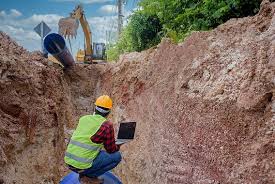
Construction projects depend on much more than blueprints and budgets; they rest, quite literally, on the ground beneath our feet. Yet, every job site is unique, and unseen subsurface conditions can quickly transform the best-laid plans into costly risks.
Geotechnical soil testing moves beyond guesswork, providing civil engineers, construction managers, and architects with the hard data required to support sound engineering decisions. By evaluating essential soil properties through field and laboratory testing, teams can mitigate risks, design structurally sound foundations, and ensure strict compliance with local and national building codes.
Here is a look at the five critical pillars of geotechnical soil testing that keep construction projects stable, safe, and on schedule.
1. Moisture Content Analysis
A soil’s physical properties and mechanical behavior change drastically based on how much water it holds. Moisture content analysis measures the exact amount of water present within the soil sample. Geotechnical engineers use this data to determine the optimal moisture levels required for proper soil compaction. Understanding moisture variations helps design and contracting teams predict how the soil will behave over time, preventing post-construction shifts that threaten structural integrity.
2. Atterberg Limits Testing
Soil is rarely uniform, and its consistency shifts under different weather and moisture conditions. To classify these behavioral changes, engineers utilize Atterberg Limits tests, which focus on three critical thresholds:
Liquid Limit: The exact moisture level where soil transitions from a liquid state to a plastic state.
Plastic Limit: The moisture content where the soil begins behaving as a brittle solid rather than a moldable plastic material.
Shrinkage Limit: The point where further moisture loss will no longer cause a reduction in soil volume
Identifying these parameters allows construction teams to anticipate seasonal soil movement—especially in areas prone to highly volatile expansive clays—and verify that the chosen structural materials are adequate for the environment.
3. Proctor’s Compaction Test
Achieving proper soil density is foundational to the stability of any building, road, or retaining wall. Proctor’s Compaction Test involves compressing soil samples at varying moisture levels to establish the soil’s maximum dry density and its optimal moisture content. By knowing the precise threshold where the ground can support the highest level of compaction, engineers can safely select load-bearing materials (like concrete and steel) and design stable, non-yielding foundations.
4. Specific Gravity Test
The specific gravity test calculates the ratio of the density of the soil’s solid particles to the density of pure water. This fundamental calculation provides key insights into deeper engineering properties, including the soil’s void ratio, its unit weight, and its overall degree of saturation. Armed with this data, construction professionals gain a comprehensive view of the ground’s load-bearing capacity and long-term stability under heavy structural loads.
5. Shear Strength Test
If a building’s foundation cannot withstand lateral or vertical forces, structural failure is inevitable. Shear strength testing evaluates how much shear stress a soil sample can bear before it undergoes failure or shifts entirely. This test is absolutely critical for evaluating the stability of natural or man-made slopes, determining deep foundation depths, and predicting how the ground will resist shifting over time. Knowing the soil’s ultimate strength dictates what specific designs your foundation needs to remain standing for decades to come.
Why Prioritizing Soil Testing Matters
Investing in thorough subsurface investigations prior to breaking ground eliminates expensive mid-project surprises, streamlines municipal permitting, and prevents devastating foundation reworks. Partnering with professional geotechnical engineers ensures you get the precise, rapid data needed to keep your project moving forward smoothly without compromising safety or breaking your timeline.